How GoMining Works, Part 2: Digital Miners Explained
Series rule: this part explains the variables that define a digital miner. Cosmetic characteristics are separated from economic ones on purpose.
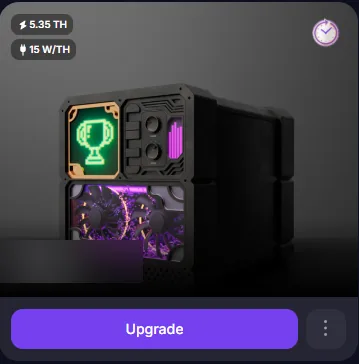
Privacy-safe editorial preview of a miner card for CloudMiningROI readers.
Every digital miner is defined by a small set of numeric variables. These variables, not the artwork, determine what the miner produces and what it costs to keep running.
Computing power: TH/s
Computing power, measured in terahashes per second (TH/s), is the miner's share of the pool's total hashrate. Gross rewards scale with power: holding everything else constant, twice the TH/s means twice the gross reward.
Energy efficiency: W/TH
Efficiency, measured in watts per terahash (W/TH), is the electricity consumed per unit of mining power. It drives the maintenance fee: a miner with lower W/TH costs less to run per TH/s and keeps a larger share of its gross reward. GoMining states that the higher the miner's efficiency, the lower the fee and the more BTC the user keeps.
Maintenance
Maintenance is charged per unit of power and covers electricity and service. It recurs daily and is deducted from rewards by default, or paid in GOMINING tokens with a discount. The full fee mechanics are covered in part 4.
Upgrades
- Power upgrade: adds TH/s to an existing miner instead of buying a new one.
- Efficiency upgrade: lowers the miner's W/TH, which reduces the maintenance fee for as long as the miner is held.
Upgrades are permanent changes to the miner's economics and cost money upfront. Whether an upgrade pays off depends on the price paid, the fee saved, and future market conditions, so it should be modeled before purchase, not after.
Collections and tradeability
Miners are grouped into collections with different artwork, price ranges and historical series. Collection and artwork have no direct effect on rewards; they can affect marketplace demand, which is a market outcome, not a product feature.
Each miner is an NFT and can be resold on the internal marketplace. Resale value is set by buyers and sellers at that moment; it is not guaranteed and it can be lower than the purchase price.
The rest of the series
- Part 1 — What GoMining is
- Part 3 — How BTC rewards are produced
- Part 4 — Maintenance fees and discounts
- Part 5 — Getting started step by step
- Part 6 — Risks and objective evaluation
Related guides
Sources and editorial notes
References are linked with descriptive text so the page remains readable and accessible.
- GoMining: official website
- GoMining Academy: official learning portal
- GoMining Academy: what a digital miner is and how it works
- GoMining Digital Miners overview
- GoMining Help Center: maintenance fees and discounts
CloudMiningROI.com does not target users in excluded jurisdictions. Availability can change; users must verify eligibility, tax treatment and local regulation before using any product.