How GoMining Works, Part 6: Risks and Objective Evaluation
Series rule: this part closes the series with what can go wrong. No probability or magnitude is assigned; the goal is a checklist the reader can verify independently.
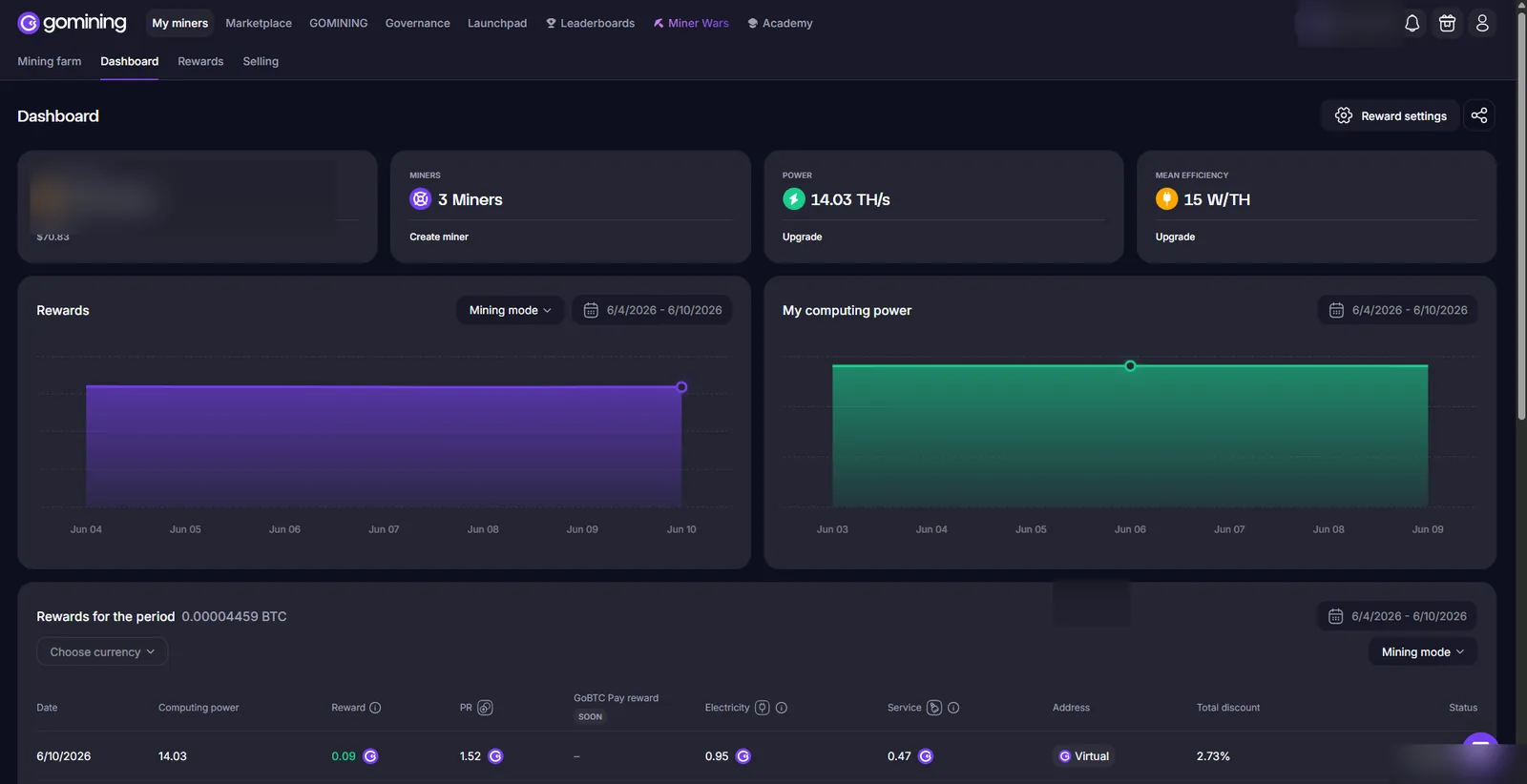
Privacy-safe editorial preview of the GoMining dashboard for CloudMiningROI readers.
An objective description of GoMining is incomplete without the failure modes. The same variables that make mining profitable in good conditions make it lose money in bad ones.
Market risks
Rewards are earned in BTC and measured against a global network. A falling BTC price reduces the value of each day's reward; rising difficulty reduces the BTC amount itself; the 2028 halving will structurally cut the block subsidy. None of these are controlled by the platform or the user.
Cost risks
The maintenance fee recurs regardless of market direction. With low BTC prices, high difficulty or a low-efficiency miner, the fee can exceed the gross reward, making the net reward negative. GoMining's reward-protection mechanism softens this for covered miners but does not eliminate it.
Token risks
Part of the cost structure (discounts, veGOMINING locking) is denominated in GOMINING, a volatile token. Its market price can move independently of BTC, and locked tokens cannot be sold during the lock period. Treating the token as pure savings or as pure speculation are both one-sided readings.
Platform and custody risks
The hashrate, the rewards and the marketplace are operated by one company. Users hold a claim on the platform, not the machines themselves. Service terms, fee schedules and feature availability can change. Regulatory treatment varies by country and can change. These risks exist in every hosted-mining model and they do not disappear with tenure.
An objective evaluation checklist
- Model at least three scenarios (conservative, neutral, optimistic) before buying, and re-model after real reward data arrives.
- Compare the mining route against simply buying BTC: mining adds operational cost and fee exposure in exchange for a hashrate-denominated asset.
- Count the total cost of ownership: purchase price, upgrades, maintenance over the holding period, and marketplace fees if reselling.
- Verify what can be verified: public documentation, the whitepaper, pool information and published company material, and weigh what cannot.
- Decide the maximum acceptable loss before the first purchase, not after.
The rest of the series
- Part 1 — What GoMining is
- Part 2 — Digital miners explained
- Part 3 — How BTC rewards are produced
- Part 4 — Maintenance fees and discounts
- Part 5 — Getting started step by step
Related guides
- GoMining risks deep dive
- Is GoMining legit? What to check
- Editorial review: pros, cons and suitability
- GoMining ROI explained
Sources and editorial notes
References are linked with descriptive text so the page remains readable and accessible.
- GoMining: official website
- GoMining Academy: official learning portal
- GoMining whitepaper
- GoMining Help Center: maintenance fees and discounts
- GoMining Academy: the GOMINING token and its use cases
CloudMiningROI.com does not target users in excluded jurisdictions. Availability can change; users must verify eligibility, tax treatment and local regulation before using any product.