GOMINING Tokenomics Explained
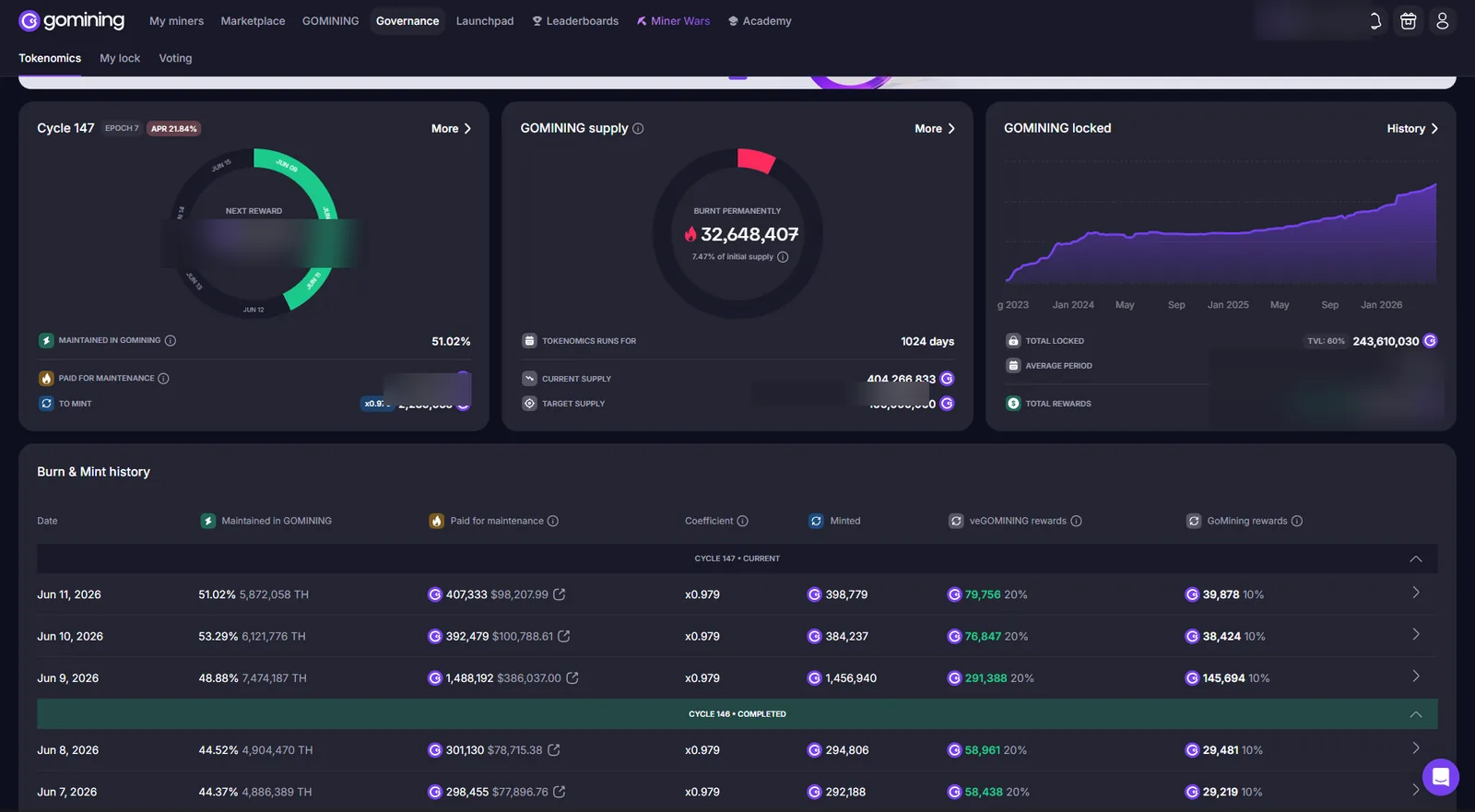
GoMining tokenomics dashboard with burn, mint, locked supply and rewards
This guide explains gomining tokenomics explained from a practical investor and user perspective. It is written for readers who want to understand what the feature does, how it affects GoMining profitability, and how to model it in CloudMiningRoI before committing capital.
Burn and mint model
GoMining tokenomics is built around ecosystem usage. Official materials describe the GOMINING token as actively used inside the ecosystem and refer to recurring burn and mint mechanics linked to maintenance and token flow.
What to monitor
- Supply and target supply.
- Burned tokens.
- Locked supply.
- Maintenance demand.
- Governance incentives.
- Exchange and liquidity conditions.
Experience note
We keep the experience-based notes in one dedicated page: Our GoMining experience.
Related guides
- What Is GoMining? Complete Guide to Digital Bitcoin Mining
- GoMining ROI Explained: How to Estimate Profitability
- GoMining ROI Calculator: Inputs You Should Model
- GOMINING Token Explained
- veGOMINING and Token Locking Explained
- GoMining Governance and Voting Explained
- GoMining Liquidity Pools Explained
- GoMining Risks: What Investors Should Understand
Questions
Have questions? Read the GoMining FAQ.
Sources and editorial notes
References are linked with descriptive text so the page remains readable and accessible.
- GoMining Digital Miners overview
- GoMining miner documentation
- GoMining tokenomics page
- Miner Wars help center
- GoMining whitepaper
CloudMiningRoI.com does not target users in excluded jurisdictions. Availability can change; users must verify eligibility, tax treatment and local regulation before using any product.
Next step
Model conservative, neutral and optimistic cases before buying or upgrading a miner.